
Quick summary
At a glance: common challenges
- Navigating unstructured university systems and unwritten social rules
- Sensory overload in busy, unpredictable environments
- Social isolation even among high-achieving students
- Anxiety triggered by last-minute changes
At a glance: quick strategies
- Communicate any changes in writing, as early as possible
- Use direct, literal language; explain figurative expressions
- Structure group work with explicit roles
- Offer sensory-friendly, low-stimulation spaces
1. Introduction and Overview
Autism is a lifelong form of neurodivergence affecting how people process sensory information, communicate, and navigate social situations. Autistic students in higher education are frequently highly capable academically, yet research consistently shows they struggle disproportionately with the structural, social, and sensory demands of university life rather than with the academic content itself. As one autistic student described it in a UK research study, university life is like ‘running on Windows while everyone is a Mac’ — the same information is available, but the way it is delivered and expected to be processed does not match.
This chapter draws on published research into autistic students’ lived experience of higher education, an integrative review of paradigm shifts in how autism and disability are understood in English higher education, and a case study of a holistic university support model, adapted for institutions in Uzbekistan.
Why this matters
2. Understanding the Disability
What autism is
- Autism is a spectrum: it affects communication, sensory processing, social interaction, and executive function differently and to different degrees in each person.
- Understanding of autism and disability has shifted over time from a medical model (locating the ‘problem’ in the individual), to a biopsychosocial model, to a social model that emphasises how social, environmental, and cultural factors create disabling barriers.
- Many autistic students are academically capable and may have entered higher education without additional support needs being identified or disclosed.
Common misconceptions
- That autism looks the same in every student, or matches a stereotype: presentation varies enormously, and many autistic students ‘mask’ their difficulties in ways that are exhausting but not visible to staff.
- That academic success means a student is not struggling: research shows autistic students can achieve strong grades while experiencing significant distress, isolation, and burnout.
- That difficulties are about intelligence or motivation: the underlying barriers are usually structural (unclear expectations, unpredictability, sensory environment) and social (hidden norms, exclusion), not cognitive ability.
- That accommodations for autism are only about physical sensory adjustments: predictability, clear communication, and social inclusion are equally, if not more, important.
3. Common Challenges in Higher Education
- Navigating unstructured university systems — timetables, unwritten expectations, and informal communication norms — is consistently identified as a major source of difficulty.
- Social integration is a significant barrier: hidden social rules, fast-paced group interaction, and informal knowledge shared through social circles can leave autistic students feeling, in their own words, permanently ‘on the outside’.
- Sensory overload in busy, unpredictable environments (crowded lecture theatres, open-plan study spaces, noisy corridors) contributes to fatigue and disengagement.
- Anxiety is frequently triggered by unclear expectations, last-minute changes, and inconsistent communication between staff.
- Lived-experience research describes a pattern of low mood, exhaustion, exam failure despite prior strong performance, and social isolation building cumulatively across a degree.
4. Barriers Faced by Students
| Barrier type | What it looks like in practice |
|---|---|
| Academic / Learning | Ambiguous instructions and unstated expectations; unstructured or unpredictable course delivery; sudden changes to plans or deadlines. |
| Digital | Inconsistent, cluttered, or unpredictable virtual learning environment layout; lack of clear written instructions to supplement verbal content. |
| Communication | Reliance on implicit social cues; ambiguous or figurative language used without explanation; informal, unwritten norms for participation. |
| Social | Group work with unclear roles and fast, unstructured discussion; exclusion from informal social networks and ‘silent knowledge’ shared through them. |
| Assessment | Unclear marking criteria; last-minute changes to exam format or logistics; sensory-heavy exam environments (large halls, noise, crowding). |
5. Inclusive Teaching Strategies
Before class
- Publish a consistent, predictable course structure and give advance notice of any changes to plans, rooms, or deadlines.
- Share clear, written expectations for upcoming sessions and assignments rather than relying on informal or verbal-only updates.
During lectures
- Use direct, literal language; explain idioms, sarcasm, or figurative expressions rather than assuming they will be understood as intended.
- Signpost the structure of the session explicitly (what is coming next, how long each part will take).
Group work
- Assign clear, explicit roles within groups rather than leaving this to informal negotiation.
- Offer structured discussion formats (written prompts, turn-taking) rather than open, fast-paced debate.
Practical sessions
- Provide written step-by-step instructions alongside any demonstration.
- Give advance notice of any sensory factors (noise, crowding, strong lighting) so students can prepare.
Online learning
- Keep the course page structure consistent and predictable across weeks.
- Provide written summaries of any live or informal discussion that took place.
Assessment
- Provide clear, literal, unambiguous marking criteria well in advance.
- Avoid last-minute changes to exam logistics; where changes are unavoidable, communicate them as early and directly as possible.
6. Classroom Accommodations
- Advance notice of any changes to timetable, room, or course plan, communicated directly and in writing.
- Access to a sensory-friendly or low-stimulation space for breaks or for sitting exams.
- Clear, written instructions provided alongside any verbal explanation, particularly for multi-step tasks.
- Alternative ways to participate in class discussion (written contributions, smaller group formats) offered as standard options.
- One-to-one mentoring or regular check-ins, which research identifies as a particularly transformative form of support.
7. Digital Accessibility Considerations
- Keep the learning management system structure consistent and predictable from week to week.
- Provide written instructions and summaries to accompany any live or verbal-only content.
- Avoid unnecessary visual clutter or last-minute changes to how online materials are organised.
- Give advance written notice of any changes to online session times, formats, or platforms.
8. Communication Guidelines
| Do | Avoid |
|---|---|
| Use direct, literal, and specific language | Rely on idioms, sarcasm, or implied meaning without explanation |
| Give advance written notice of any changes | Make last-minute changes to plans, rooms, or deadlines without warning |
| State expectations and instructions explicitly | Assume ‘unwritten rules’ or social norms are obvious |
| Check understanding directly and specifically | Assume silence or eye contact (or its absence) indicates understanding or disengagement |
| Offer written back-up for verbal or social information | Rely on students picking up informal, socially-transmitted information |
9. Environmental Adjustments
- Sensory-friendly, low-stimulation spaces available for breaks, study, or sitting exams.
- Reduced background noise and predictable lighting in teaching spaces where possible.
- Consistent, unchanging room allocations and layouts wherever practical.
- Clear signage and predictable wayfinding around campus to reduce anxiety about navigating unfamiliar spaces.
- Quiet, less crowded times or spaces offered as an alternative to busy communal areas.
10. Assistive Technologies
| Technology | How and when it helps |
|---|---|
| Visual schedules and planning apps | Make session structure, timetables, and multi-step tasks explicit and predictable. |
| Noise-cancelling headphones | Reduce sensory overload in busy or noisy environments such as libraries and lecture halls. |
| Written communication tools (e.g., structured messaging, shared documents) | Provide an alternative to fast-paced verbal or informal communication. |
| Task and reminder apps | Support executive function and reduce reliance on remembering unwritten expectations. |
| Mentoring and check-in platforms | Support the one-to-one, relationship-based check-ins research identifies as particularly effective. |
11. Real-Life Example / Case Study
Case Study: A high-achieving student experiencing cumulative isolation
Botir (a composite, illustrative example) achieved excellent grades in his first year but began to struggle in his second. Group project work regularly moved faster than he could follow, roles were never explicitly assigned, and a late room change for a seminar was announced only via a notice on the door. Over the semester, missed informal information and repeated last-minute changes led to rising anxiety, and Botir began avoiding group sessions altogether.
Poor practice
- Room and timetable changes communicated only informally, at short notice.
- Group work left unstructured, with roles and expectations never made explicit.
Inclusive practice
- The department commits to communicating any changes in writing, with as much advance notice as possible, as standard practice for the whole cohort.
- The seminar tutor introduces explicit roles and a structured discussion format for all group work.
- A regular one-to-one check-in is offered to Botir with a named academic mentor.
Lessons learned
- The changes that helped Botir most were structural and applied to the whole class, not individual adjustments requiring disclosure.
- Predictability and explicit structure directly reduced the anxiety that had been driving his disengagement.
12. Practical Scenarios
Scenario A
A seminar room changes at short notice and this is only announced verbally at the end of the previous session. What do you do?
- Send a written notice (email or course page update) as soon as a change is confirmed, and avoid relying on verbal-only or last-minute announcements as standard practice.
Scenario B
A student withdraws from group discussions and seems increasingly disengaged over the semester. What do you do?
- Introduce clearer structure to group work (explicit roles, written prompts) for the whole group, and offer a private check-in rather than raising it only in front of peers.
Scenario C
A student takes an idiom or instruction literally and is confused by the intended meaning. What do you do?
- Rephrase using direct, literal language without drawing attention to the misunderstanding, and build a habit of using clearer language going forward.
13. Do’s and Don’ts
| Do | Don’t |
|---|---|
| Communicate changes in writing, as early as possible | Announce changes only verbally or at short notice |
| Use direct, literal language and explain figurative expressions | Rely on idioms, sarcasm, or implied meaning |
| Structure group work with explicit roles | Leave group roles and norms informal and unstated |
| Offer sensory-friendly spaces and quiet alternatives | Assume all students are comfortable in busy, high-stimulation spaces |
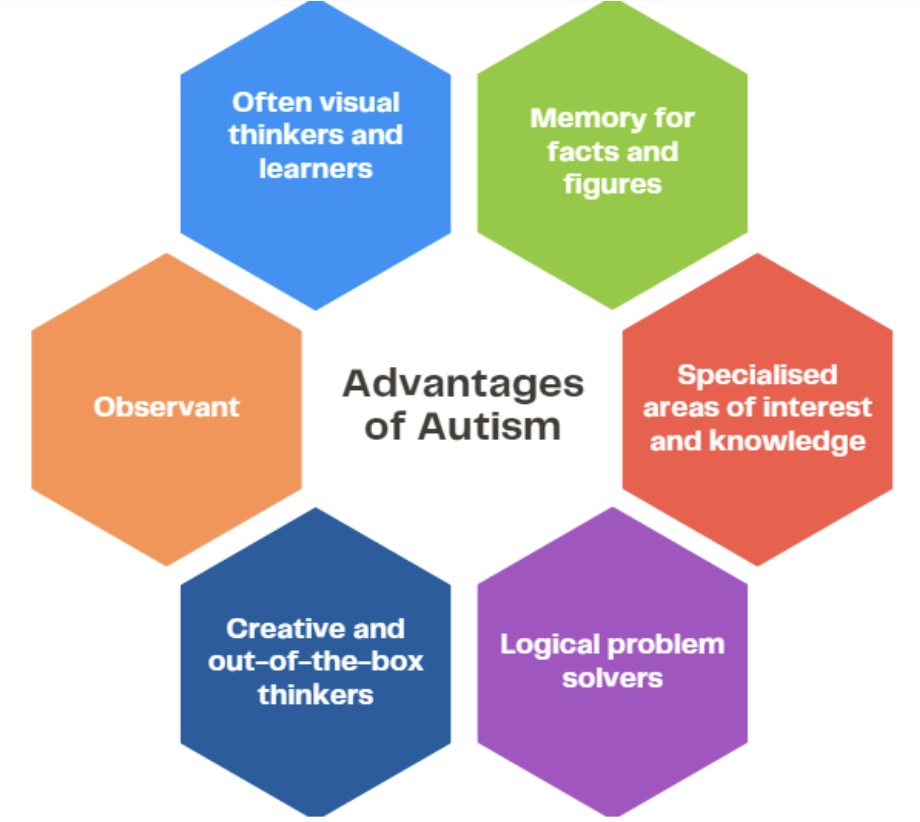
| Recognise strengths such as focus, memory, and detail orientation | Focus only on social or communication difficulties |
14. Lecturer Checklist
- Have I communicated any changes to plans, rooms, or deadlines in writing and as early as possible?
- Am I using direct, literal language, and explaining any figurative expressions I use?
- Have I made expectations and instructions explicit rather than assuming they are obvious?
- Is group work structured with clear, explicit roles rather than left informal?
- Have I offered alternative ways to participate (written contributions, smaller groups)?
- Am I aware of sensory factors (noise, lighting, crowding) in the spaces I teach in?
15. Student Support / Disability Services Checklist
- Is there a low-stigma route for students to disclose autism and discuss support, if they choose to?
- Is one-to-one mentoring or regular check-in support available and clearly signposted?
- Are sensory-friendly spaces available for study, breaks, and exams?
- Is there coordination between disability services, academic staff, and wellbeing teams so support does not depend on the student repeating their needs to every department?
- Are exam adjustments (quiet room, extra time, alternative formats) agreed and documented ahead of assessment periods?
16. Quick Reference Guide
17. Key Takeaways
- Autistic students’ difficulties in higher education are overwhelmingly structural and social, not a reflection of academic ability.
- Predictability, explicit communication, and clear structure are core accessibility needs, not optional extras.
- Social isolation is one of the most significant and under-addressed barriers, and requires intentional design (structured group work, peer education) rather than being left to resolve itself.
- Support works best when coordinated holistically across disability services, academic staff, mentors, and wellbeing teams, rather than delivered as isolated adjustments.
- Strengths such as deep focus, strong memory, and attention to detail are consistently under-recognised and, when leveraged, support confidence and academic success.
18. References
Tang, E. S. Y., Griffiths, A., & Welch, G. F. (2024). The Impact of Three Key Paradigm Shifts on Disability, Inclusion, and Autism in Higher Education in England: An Integrative Review. Trends in Higher Education, 3(1), 122–141. doi.org/10.3390/higheredu3010007
Fabri, M., Fenton, G., Andrews, P., & Beaton, M. (2022). Experiences of Higher Education Students on the Autism Spectrum: Stories of Low Mood and High Resilience. International Journal of Disability, Development and Education, 69(4), 1411–1429. doi.org/10.1080/1034912X.2020.1767764
Macleod, A. Beyond the books: case study of a collaborative and holistic support model for university students with Asperger syndrome. doi.org/10.1080/03075070802590643
CAST (2024). Universal Design for Learning Guidelines. udlguidelines.cast.org
Sections 1–4, and parts of 5, 6, and 18, draw directly on the Tang et al. (2024) paradigm-shift review, the Fabri et al. (2022) lived-experience study, and the Macleod holistic support model case study in the project material. Sections 7, 8, 9, 10, 11, 12, 13, 14, 15, and 16 have been newly drafted to complete the standardised 18-part structure, consistent with the cited evidence base, and should be reviewed by the project team.